
DBeaver Overview
- Dbeaver Postgresql Tutorial
- Dbeaver With Postgresql Tutorial
- Dbeaver Postgresql Show All Databases
- Dbeaver With Postgresql Download
- Dbweaver Installation For Postgre
DBeaver is a universal database management tool for everyone who needs to work with data in a professional way. With DBeaver you are able to manipulate with your data like in a regular spreadsheet, create analytical reports based on records from different data storages, export information in an appropriate format. Navicat for PostgreSQL Pricing is three tiers; non-commercial, standard, and enterprise. They are $119, $199, and $299, respectively. DBeaver is open source like PgAdmin. However, it supports different types of databases like Navicat. DBeaver also has an enterprise version which provides advanced plugins for productivity.
DBeaver is a free, open source multiplatform database management tool and SQL client for developers and database administrators. DBeaver can be used to access any database or cloud application that has an ODBC or JDBC driver, such as Oracle, SQL Server, MySQl, Salesforce, or MailChimp. Devart DBeaver provides you with the most important features you'd need when working with a database in a GUI tool, such as:
- SQL queries execution
- Metadata browsing and editing
- SQL scripts management
- Data export/import
- Data backup
- DDL generation
- ER diagrams rendering
- Test data generation
- BLOB/CLOB support
- Database objects browsing
- Scrollable resultsets
The tool comes in two editions — Community and Enterprise. Enterprise Edition supports NoSQL databases, such as MongoDB or Cassandra, persistent query manager database, SSH tunneling, vector graphics (SVG) and a few other enterprise-level features. Note though that you can access a MongoDB database from DBeaver Community Edition using the respective Devart ODBC driver. For the purposes of this guide, we'll use the Community Edition of DBeaver to retrieve data from PostgreSQL via the Open Database Connectivity driver.
Creating an ODBC Data Source to Use PostgreSQL Data in DBeaver
- Click the Start menu and select Control Panel.
- Select Administrative Tools, then click ODBC Data Sources.
- Click on the System DSN tab if you want to set up a DSN name for all users of the system or select User DSN to configure DSN only for your account.
- Click the Add button and double-click Devart ODBC Driver for PostgreSQL in the list.
- Give a name to your data source and set up the connection parameters.
- Click the Test Connection button to verify that you have properly configured the DSN.
Dbeaver Postgresql Tutorial
When using ODBC driver for PostgreSQL with DBeaver, SQL_WVARCHAR data types may be displayed incorrectly in DBeaver. To prevent this, you need to set the string data types to Ansi either in the Advanced Settings tab of the driver configuration dialog or directly in the connection string (String Types=Ansi) — all string types will be returned as SQL_CHAR, SQL_VARCHAR and SQL_LONGVARCHAR.
Connecting to PostgreSQL Data from DBeaver via ODBC Driver for PostgreSQL
Follow the steps below to establish a connection to PostgreSQL in DBeaver.
- In the Database menu, select New Database Connection.
- In the Connect to database wizard, select ODBC and click Next.
- Enter the previously configured DSN in the Database/Schema field.
- Click Test Connection. If everything goes well, you'll see the Success message.
Viewing PostgreSQL Database Objects and Querying Data
You can expand out the database structure in DBeaver's Database Navigator to visualize all the tables in PostgreSQL database. To view and edit the data in a table, you need to right-click on the target table name and select View data.The content of the table will be displayed in the main workspace.
If you want to write a custom SQL query that will include only the necessary columns from the table, you can select New SQL Editor in the SQL Editor main menu. Create your query and run it by clicking Execute SQL Statement to view the results in the same window.

| © 2015-2021 Devart. All Rights Reserved. | Request Support | ODBC Forum | Provide Feedback |
If you’re not familiar with importing data using DBeaver, then I encourage you to view my previous blog here.
When importing data, sometimes you receive data that isn’t in csv format. The delimiter is tabbed, barred or others. DBeaver’s csv driver can be customized to handle these delimiters and I will show you how.
Connecting to the delimited File
Right-click your database connection (or anywhere if your connections are empty), click Create and then click Connection.
Make sure the All tab is selected on the left and scroll down to CSV. Click Next.
Dbeaver With Postgresql Tutorial

Click Browse… and select the folder where your csv file is that you saved from Excel. You’re selecting a folder here, not a file.
At this point, to modify the settings, click Edit Driver Settings, then click the Connection properties tab in the lower half of the window.
Here you have several options:
charset – The character set of your data.
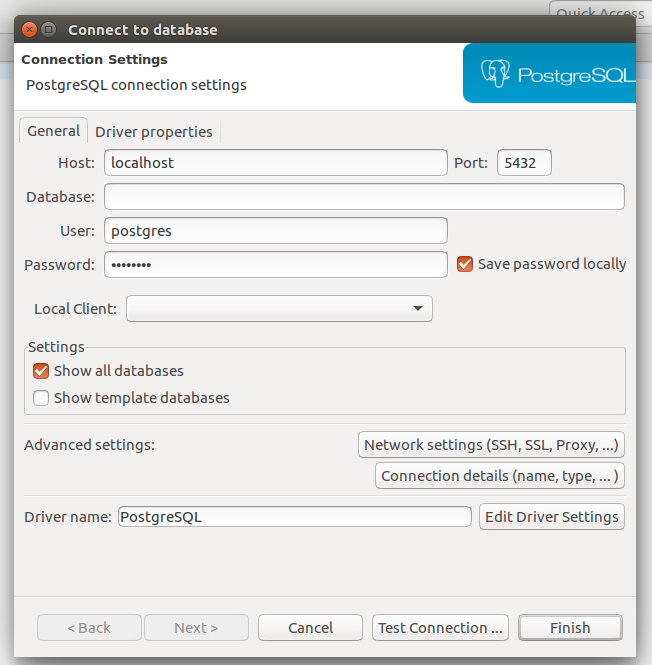
Dbeaver Postgresql Show All Databases
fileExtension – The extension of the file you’re trying to import.
Dbeaver With Postgresql Download
quotechar – The character used in text fields to denote strings, if it exists.
separator – This is the delimiter used to separate columns.
suppressHeaders – False to include Headers, True to exclude Headers.
In my example I am using a file called delimted_data.txt, the delimited character is a vertical bar | and I will have headers in the file.
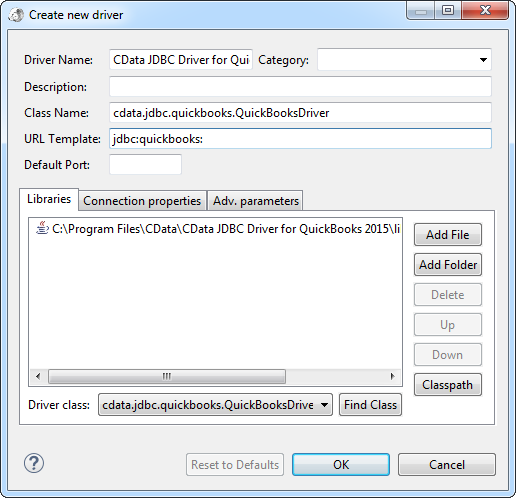
Change the Connection Properties to match below:
Once the properties are set, click OK and then click Finish.
At this point you can select the data from the file like you would any other imported data.
If you’re dealing with TAB delimited data, you can simply cut and paste a TAB from a text editor into the Connection Properties like below:
Dbweaver Installation For Postgre
If you’re looking for other ways to import files into DBeaver, check out my other blogs: