
A set of Bootstrap 3 Snippets for Visual Studio Code. Create a new HTML document and type 'bs3' to see all available snippets. Available SnippetsAlerts
Badges
Buttons
Buttons: Block
Buttons: Block Link
Buttons: Extra Small
Buttons: Extra Small Link
Buttons: Small
Buttons: Small Link
Buttons: Large
Buttons: Large Link
Buttons: Link
Buttons: Groups & Toolbar
Carousel
CDN Links
Clearfix
Forms
Form Inputs (Fields) & Select
Form Input Groups
Grid: Container, Columns, Row
Icons
Images
Jumbotron
Labels
List Groups
Local
Media Objects
Modal
Navigation
Page Header
Pagination
Panels
Progress Bars
Tables
Tabs
Templates
Wells
SourceAll snippets have been sourced from the Bootstrap 3 - Sublime Plugin LicenseThis Visual Studio Code extension is open-source software licensed under the MIT license. |
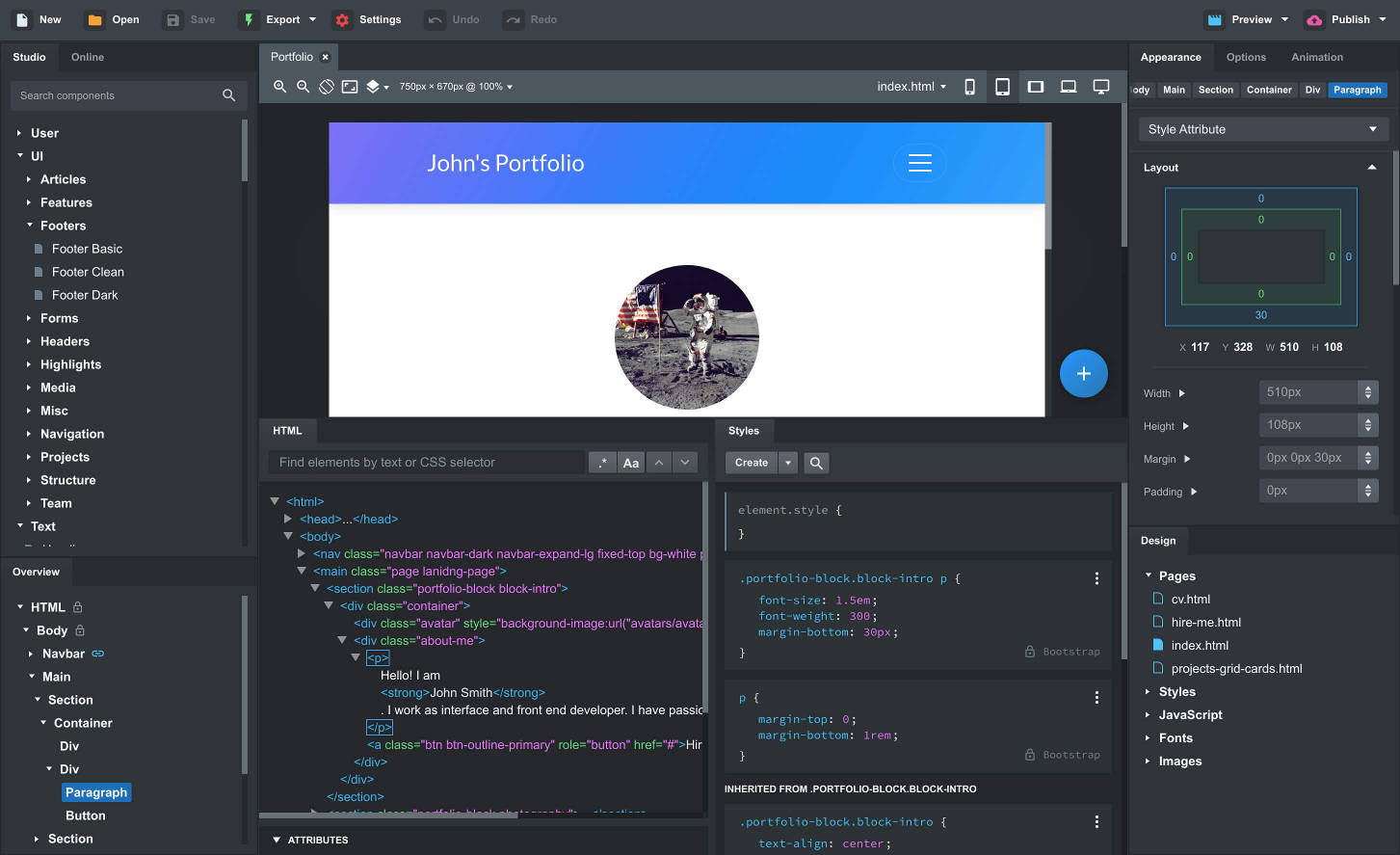
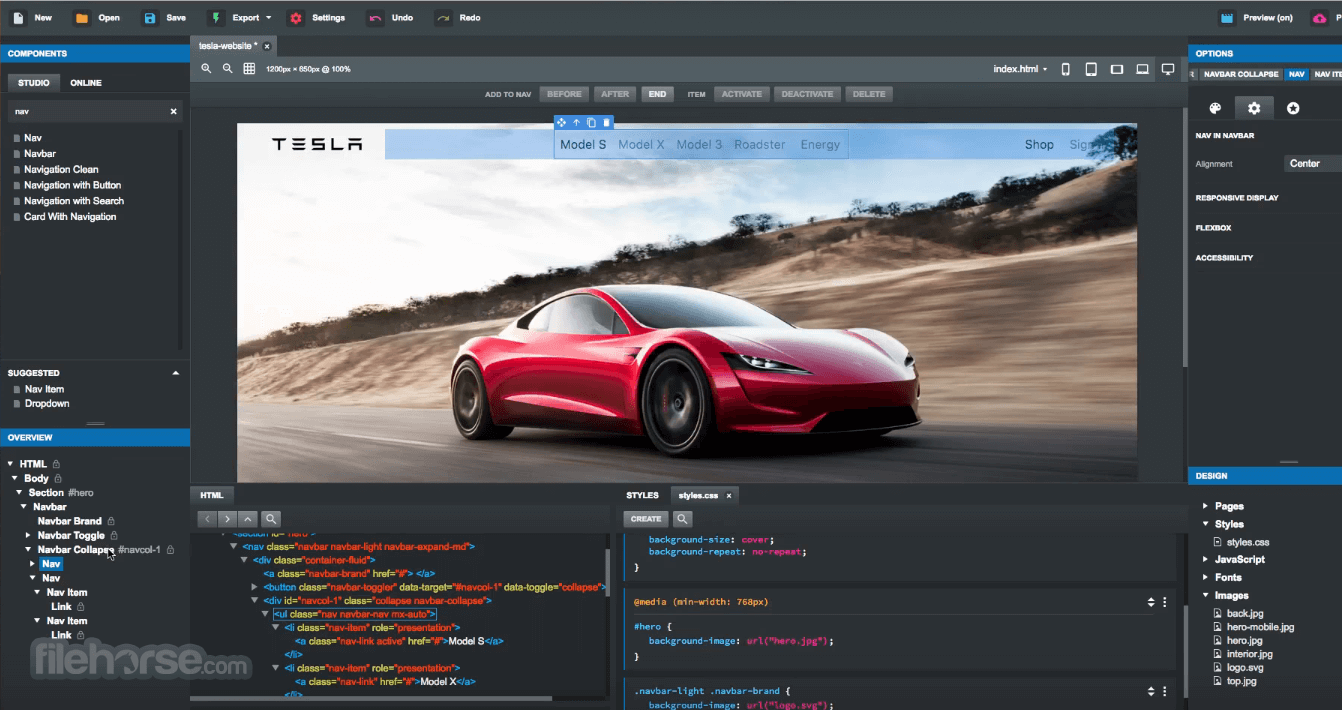
Bootstrap Studio Pro Free Download Latest Version for Windows. It is full offline installer standalone setup of Bootstrap Studio Pro v5.2.1. Bootstrap Studio Pro Overview. Bootstrap Studio Pro is a special application which helps you design and create presentable and beautiful websites. If you want to learn about bootstrap studio tutorial for beginners step by step please check out: 🏽👉🏾 video is all about bootst.
Overview
Shiny includes a number of facilities for laying out the components of an application. This guide describes the following application layout features:
A
sidebarLayout(): for placing asidebarPanel()of inputs alongside amainPanel()output content.Custom layouts using Shiny’s grid layout system (i.e.,
fluidRow()&column()).Segmenting layouts using the
tabsetPanel()andnavlistPanel()functions.Creating applications with multiple top-level components using the
navbarPage()function.
All these features are made available via Bootstrap, an extremely popular HTML/CSS framework (though no prior experience with Bootstrap is assumed). Shiny currently defaults to Bootstrap 3. To upgrade to a more recent version and/or implement custom Bootstrap themes, check out the application themes article.
The sidebar layout is a useful starting point for most applications. This layout provides a sidebar for inputs and a large main area for output:
Here’s the code used to create this layout:
Note that the sidebar can be positioned to the left (the default) or right of the main area. For example, to position the sidebar to the right you would use this code: Professional paint brushes.
Grid Layout
The familiar sidebarLayout() described above makes use of Shiny’s lower-level grid layout functions. Rows are created by the fluidRow() function and include columns defined by the column() function. Column widths are based on the Bootstrap 12-wide grid system, so should add up to 12 within a fluidRow() container.
To illustrate, here’s the sidebar layout implemented using the fluidRow(), column() and wellPanel() functions:
The first parameter to the column() function is it’s width (out of a total of 12 columns). It’s also possible to offset the position of columns to achieve more precise control over the location of UI elements. You can move columns to the right by adding the offset parameter to the column() function. Each unit of offset increases the left-margin of a column by a whole column.
Here’s an example of a UI with a plot at the top and three columns at the bottom that contain the inputs that drive the plot:
The code required to implement this UI is as follows:
There are a few important things to note here:
The inputs are at the bottom and broken into three columns of varying widths.
The
offsetparameter is used on the center input column to provide custom spacing between the first and second columns.The page doesn’t include a
titlePanel()so the title is specified as an explicit argument tofluidPage().
Grid layouts can be used anywhere within a fluidPage() and can even be nested within each other. You can find out more about grid layouts in the Grid Layouts in Depth section below.
Tabsets
Often applications need to subdivide their user-interface into discrete sections. This can be accomplished using the tabsetPanel() function. For example:
The code required to create this UI is:
Tabs can be located above (the default), below, left, or to the right of tab content. For example, to position the tabs below the tab content you would use this code:
Navlists
When you have more than a handful of tabPanels the navlistPanel() may be a good alternative to tabsetPanel(). A navlist presents the various components as a sidebar list rather than using tabs. It also supports section heading and separators for longer lists. Here’s an example of a navlistPanel():
Neighborhood garage sales. The code required to implement this is as follows (note that the tabPanels are empty to keep the example uncluttered, typically they’d include additional UI elements):
Navbar Pages
You may want to create a Shiny application that consists of multiple distinct sub-components (each with their own sidebar, tabsets, or other layout constructs). The navbarPage() function creates an application with a standard Bootstrap Navbar at the top. For example:
Note that the Shiny tabPanel() is used to specify the navigable components.
Secondary Navigation
You can add a second level of navigation to the page by using the navbarMenu() function. This adds a menu to the top level navbar which can in turn refer to additional tabPanels.
Additional Options
There are several other arguments to navbarPage() that provide additional measures of customization:
| Argument | Description |
|---|---|
| header | Tag of list of tags to display as a common header above all tabPanels. |
| footer | Tag or list of tags to display as a common footer below all tabPanels |
| inverse | TRUE to use a dark background and light text for the navigation bar |
| collapsable | TRUE to automatically collapse the navigation elements into a menu when the width of the browser is less than 940 pixels (useful for viewing on smaller touchscreen device) |
Grid Layouts in Depth
There are two types of Bootstrap grids, fluid and fixed. The examples so far have used the fluid grid system exclusively and that’s the system that’s recommended for most applications (and the default for Shiny functions like navbarPage() and sidebarLayout()).
Both grid systems use a flexibly sub-dividable 12-column grid for layout. The fluid system always occupies the full width of the web page and re-sizes it’s components dynamically as the size of the page changes. The fixed system occupies a fixed width of 940 pixels by default and may assume other widths when Bootstrap responsive layout kicks in (e.g. when on a tablet).
The following sections are a translation of the official Bootstrap 3 grid system documentation, with HTML code replaced by R code.
Fluid Grid System
The Bootstrap grid system utilizes 12 columns which can be flexibly subdivided into rows and columns. To create a layout based on the fluid system you use the fluidPage() function. To create rows within the grid you use the fluidRow() function; to create columns within rows you use the column() function.
For example, consider this high level page layout (the numbers displayed are columns out of a total of 12):
To create this layout in a Shiny application you’d use the following code (note that the column widths within the fluid row add up to 12):
Column Offsetting
It’s also possible to offset the position of columns to achieve more precise control over the location of UI elements. Move columns to the right by adding the offset parameter to the column() function. Each unit of offset increases the left-margin of a column by a whole column. Consider this layout:
To create this layout in a Shiny application you’d using the following code:
Column Nesting
When you nest columns within a fluid grid, each nested level of columns should add up to 12 columns. This is because the fluid grid uses percentages, not pixels, for setting widths. Consider this page layout:
To create this layout in a Shiny application you’d use the following code:
Note that each time a fluidRow() is introduced the columns within the row add up to 12.
Fixed Grid System
The fixed grid system also utilizes 12 columns, and maintains a fixed width of 940 pixels by default. If Bootstrap responsive features are enabled (they are by default in Shiny) then the grid will also adapt to be 724px or 1170px wide depending on your viewport (e.g. when on a tablet).
The main benefit of a fixed grid is that it provides stronger guarantees about how users will see the various elements of your UI laid out (this is because it’s not being dynamically laid out according to the width of the browser). The main drawback is that it’s a bit more complex to work with. In general we recommend using fluid grids unless you absolutely require the lower level layout control afforded by a fixed grid.
Using Fixed Grids
Using fixed grids in Shiny works almost identically to fluid grids. Here are the differences to keep in mind:
You use the
fixedPage()andfixedRow()functions to build the grid.Rows can nest, but should always include a set of columns that add up to the number of columns of their parent (rather than resetting to 12 at each nesting level as they do in fluid grids).
Here’s the code for a fixed grid version of the simple sidebar layout shown earlier:
Column Nesting
In fixed grids the width of each nested column must add up to the number of columns in their parent. Here’s a fixedRow() with a 9-wide column that contains two other columns of width 6 and 3:
The create this row within a Shiny application you’d use the following code:
Note that the total size of the nested columns is 9, the same as their parent column.
Responsive Layout
The Bootstrap grid system supports responsive CSS, which enables your application to automatically adapt its layout for viewing on different sized devices. Responsive layout includes the following:
- Modifying the width of columns in the grid
- Stack elements instead of float wherever necessary
- Resize headings and text to be more appropriate for devices
Responsive layout is enabled by default for all Shiny page types. To disable responsive layout you should pass responsive = FALSE to the fluidPage() or fixedPage() function.
Supported Devices
Bootstrap Studio Cracked Version
When responsive layout is enabled here is how the Bootstrap grid system adapts to various devices:
| Layout width | Column width | Gutter width | |
|---|---|---|---|
| Large display | 1200px and up | 70px | 30px |
| Default | 980px and up | 60px | 20px |
| Portrait tablets | 768px and above | 42px | 20px |
| Phones to tablets | 767px and below | Fluid (no fixed widths) | Fluid (no fixed widths) |
| Phones | 480px and below | Fluid (no fixed widths) | Fluid (no fixed widths) |
Bootstrap Studio Github Student
Note that on smaller screen sizes fluid columns widths are used automatically even if the page uses fixed grid layout.